The pioneers of jazz from Curacao
Biography
Angel Salsbach's quote on how the Salsbach Jazz trio came about:
I am most probably standing here because on a crazy day, 37 years ago, I met a guy named Etzel Provence,and it must have been in a flash of temporary insanity, that we thought it would be fun to start a Jazz Trio. We named the trio “The Salsbach Jazz Trio”, because Etzel said that this was my baby. If we knew then what we would have to do to raise this baby properly, we would still be talking about Jazz and we would still be listening to Jazz music only. I came to Curaçao in 1951 from Bonaire and I had never heard of Jazz music before nor had I seen the word written anywhere. I was used to play folklorist music of Bonaire and of Curaçao and in those days I started to listen to classical music, which I still like very much. It must have been in 1953, that I visited a concert of the Philharmonic Orchestra of Surinam in the Surinam club J.P.F. They had a nice program with a lot of, to me well known, classical masterpieces except for the last one. I was struck by the opening bars of a to me completely new kind of music and engraved on my mind for ever since then it was. The music was the “Rhapsody in Blue” of George Gershwin. Years later I learned that it was the blue notes that opened a new dimension for me in music, a dimension I never knew before. What touched me that day, listening to Rhapsody in Blue, was the use of the blue notes by Gershwin and the way he did it by letting the pianist strike the major and the minor third or seventh together, those off-pitch blue notes which in fact cannot be played on the piano because they fall somewhere in the cracks between the keys. The rest of the program of that concert was wiped out of my mind by Rhapsody in blue and it became a kind of obsession for me. In 1955 I moved to Aruba and played the trumpet in a Arubian Orchestra “Conjunto del Nuevo Ritmo”, playing Caribbean and Latin American dance music. After each rehearsal I would visit my friend the late pianist Eddy Bennett and listen for hours to Jazz music. I became familiar with music of Duke Ellington, Errol Garner, Count Basie, W.C. Handy, the breath taking virtuoso Art Tatum and many more great Jazz artists. I discovered that improvisation is inherent to Jazz. It is also the most creative element in one of the most expressive music of our time. I used to sit down and replay on and on that particular improvisation of Stuff Smith on his Jazz violin in “Sophisticated Lady” of Duke Ellington and also used to replay the short piano solo of Bud Powell in Celia. I learned that it is not important which notes or chords are played in Jazz, but how these are played. I also learned that it is not what you do but the way you do it is important. Listening to Cootie Williams in Ellington’s band, I must confess that I started to doubt if I should continue to play the trumpet. In 1957 I left for Holland and took my trumpet with me. Listening to the Dutch Swing College band, one of the best Dixieland Bands of Holland, I got courage and confidence again in playing my trumpet. I started to play some of the evergreens played in New Orleans style at home, but I was confronted with a couple of big problems. First I used to play only from sheets and second I feared I could never reach that level of freedom, creativity and technicality in Jazz, which is needed to do any kind of improvisation. In my efforts I felt I was missing something. Something that I also missed in the bands like the Dutch Swing College Band, but I did not know what is was. During a life concert of Kid Ory in Holland, I suddenly understood that it was the soul of Jazz that I was missing . I also realized that the trumpet was not the kind of instrument I needed to express the soul of Jazz that I felt and which I recognized in Rhapsody in Blue. I stopped playing the trumpet and I started to listen to Duke Ellington, Louis Armstrong and Oscar Peterson Trio. While listening to “Oscar Ride Again” of Oscar Pettiford I noticed the string bass. However after listening to George Duvivier, Ray Brown and Charlie Mingus I got convinced that I could express the soul of Jazz I felt in me better with a string bass than with a trumpet. After realizing this I decided to buy a string bass. Since I played the mandolin from my fifth year on, I felt that I could handle a string instrument like the bass. With a little help of some friends and some books I learned my self to play the bass. I made sure not to become dependent on sheetmusic anymore, because I felt that it could block my creativity and expressions through music. With my trumpet under my arm and my bass on my shoulder I returned to Curaçao in 1962. From 1962 till 1964 I played the bass in a couple of bands which played Caribbean music.In one of those bands, the Tropical Combo, I met the pianist Etzel Provence who was also walking around with the same blue feeling I felt. Like me he too had the blues. I now have to speak in the “we” form, telling about Etzel and my experiences with Jazz, because since the day we met a true musical and personal relationship started. From the beginning both Etzel and I knew that we could not start playing Jazz, just because we loved it, but we knew that we should study what Jazz was. That meant that we had to study the creators of Jazz. These were the black people who were imported as slaves to work on the American plantations. In his standard work ”The making of Jazz” James Lincoln Collier said: “Despite its African elements, Jazz is not an African music. Jazz is a true fusion, combining principles and elements drawn from both European and African music. Just as green is something on itself, not merely a variation of the yellow or blue of which it is compounded, so is Jazz neither a variety of European nor African music; it is sui generis.” With this knowledge in mind, both Etzel and I started to study and discuss the first musical expressions of the black men of the U.S.A. We studied the structure, rhythm, melody, the meaning of the words and the social relevance of the cradle songs, the work songs, the Negro spirituals, the gospel songs and the blues. Soon we noticed that the blues evolved from the common musical practice that under gird the work songs, the street cry, the cradle songs as well as the spirituals. Bit by bit we learned the most important characteristics of Jazz, like the call and response structure of the songs, the coarseness of timbre called the “dirty tones” like Louis Armstrong sang and played, the using of the pentatonic scales and cross-rhythms like tapping your foot twice and at the same time clap your hands three times. We also learned about the essence of Jazz through Leonard Bernsteins’ record “What is Jazz”. We recognized the Jazz rhythm in the way the black American talk, for example: fa-ther, mo-ther, sis-ta, putting the accent on the second syllable, and we noticed the way the drums were played, especially the high hats of the drums. As you could notice, the world of Jazz is a world of creativity, a world of expression but also a world of influences. Because of the creativity, real Jazz can never be completely reproduced or imitated. When you improvise you are on your own. What you play is yours, created by yourself at that moment. You cannot repeat what you have played yourself because when improvising you are making instant compositions. When I mentioned all those Jazz masters that influenced the Salsbach Jazz Trio, I meant that each of us had his favorites. We listened to the favorites of one another, trying to feel what the musicians were doing and saturating ourselves with their music and their creations. We used their compositions and their theme songs as a source of inspiration, as a point of departure for our own interpretations. I should emphasize that we never could imitate these musicians. How can Duke Ellington, Erroll Garner, Dave Brubeck, Charlie Parker and Charles Mingus be imitated by a Trio. That’s why you might hear a touch of these musicians and a touch of the spirit that each of them radiates in the music of the Salsbach Jazz Trio. The Salsbach Jazz Trio consisting of Etzel Provence Piano, Ramon Penzo drums and Angel Salsbach Bass passed through several phases of development because we were trying to reach the state of collective instant creation, which from our point of view was the highest form of communication with music and sound expression. In the first period from 1964 to 1966 we played a lot of ballads and evergreens. And we found the improvisations in swing style important. Etzel became impressed in this period by the way Duke Ellington painted with sound color, blending sounds like a master painter blends colors. In the second period from 1966 to 1968, we entered the spheres of Art Tatum, Bud Powel, Charlie Parker, Dizzy Gillespie and the other masters of the Bebop. We entered the world of the men who created the modern Jazz, the men who influenced every thing that came afterwards, including also the Salsbach Jazz Trio. During this period we discussed the way Etzel played with his left hand having too much of Erroll Garner in stead of more subtle accompaniment and we wanted more creativity and virtuosity in his right hand. The bass got also a more melodic line. When we reached what we wanted, we left the chord structures and went into the direction of Free Jazz. At this time we also made a distinction between variation and improvisation. In variations we maintained the chords structures and in the improvisations we abandoned every thing; the melodic line, the chords structures, the tempo, the rhythms and the measures. With this we started with our process of collective instant creation. Through Bud Powell we arrived at Thelonious Monk, the genius who left the harmony and the chromaticism. The man who in stead of playing 4 or 5 notes of a chord, played only 1 or 2 and left the rest to your imagination. We have a couple of his music like Straight no Chaser and Rhithmaning on our repertoire. From Charles Mingus we learned how to build up and release tensions and how to create moods which was used in our compositions later on. We agreed with his statement: “ To produce Jazz feelings, a player cannot read notes as written, but must inflect them according to his own musical instincts” He also said: “Let the instruments talk without interruption”. From Monk it was a little step to Cecil Taylor and Archie Shepp. Cecil Taylor, Ornette Coleman, Steve Stacy, Roswell Budd and Herbie Nichols were all motivated by one idea, which was: To free Jazz from the restrictions of chords, ordinary harmony, bar lines and the ordinary do-re-mi-fa-sol notes. This was not our aim, but it correlated with our idea of “Sound Expression”. Cecil Taylor gave us a helping hand with his Unit Structures and Nefertiti the beautiful one has come. Also in the classical music we saw the same development in the compositions of Karlheinz Stockhaussen and Pierre Boulez. In my opinion, artistic expression, like music, is the materialization of a subjective reflection of the objective reality. And I think that there is a relationship between our music and the way we live and experience our community. At the end of the sixties and the beginning of the seventies we wrote and played a lot of music expressing sharp political and social vision of our community like “The rebellion of the slaves”, “Social affairs”, “The last struggle”, “Xmas of the poor”, “Reflection 81”, and “Balada di Buchi Fil”. We had of course to put up with a lot of criticism from people who thought and still think that art has to be innocent. Even reprisals were made against our great singer Ced Ride who sang Social Affairs, Buchi Fil and the Xmas concert with us. He was discharged as a singer of a big hotel here, because of singing what they called, protest songs. Can you imagine how glad I was reading about Archie Shepp and listening to his music. James Collier once said that Archie is a figure of contention in Jazz and that sometimes it is difficult to know whether the quarreling is over his music or his political ideas. Shepp himself said: ”We are not angry men. We are enraged……I can’t see separation between my music and my life”. Within these spheres, influences and circumstances the Salsbach Jazz Trio worked, wrote, played, gave concerts, gave lectures and made soundtracks for TV programs and films from 1964 till 1987. Beside concerts and performances as a Trio, we also formed part of some ensembles. With the classical guitar player Fred de Haas we played “Concierto de Aranjuez” of Rodrigo Vidre, with Jazz improvisations. We formed part of “The Curaçao Quintet”, representing the Netherlands Antilles at the Carifesta in Jamaica in 1976. We wrote The musical “E lucha final” and the musical “Apotheose” and formed part of the orchestra for both. We played the Prelude on the Dumb Waiter, Xmas concert with Ced Ride and chorus, Concert with Bibi Provence, the One woman show with Nydia Ecury, Reflection 81. We wrote and recorded soundtracks for the TV series T’Asina tabata and 5 movies of Peter Creutzberg. Our last concert for a period of 13 years was in 1987 at the opening of the first Jazz Festival organized by the Curaçao Jazz Foundation. At that time I felt that we handed over the torch of Jazz to the new Jazz generation. The new Jazz generation of Dave Mathew, Igor Atalita, Arnell Salsbach,Randall Corsen,Uti Girigorie, Roy and Elmer Louis, John Willekes, Konky Halmeyer, Walter Wout, Rudy Emerenciana, Hershel Rosario, Marlon Conradus, Bibi Provence and others. In 1999 we wrote and co-directed the musical “Di Corazante pa Kòrsou” and November last year we made a comeback in a Jazz concert in Bonaire on invitation of the Jazz Club there. Ladies and Gentlemen, I hope I was able, by telling the story of Salsbach Jazz Trio, to give you a short overview through the eyes of the Salsbach Jazz Trio on the developments of Jazz in Curaçao. I hope that the new generation will keep making Jazz, history in Curaçao so that we can speak of a great Jazz development in Curaçao in the future. Thank you. Angel Salsbach
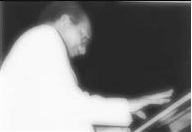
Etzel Provence

Joe Bataan (Edsel Clarinda)
Pepito(Jose Luis Reyes Ferra)

Angel Salsbach
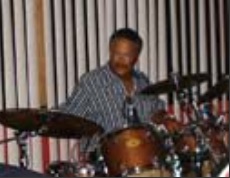
Ramon Penzo
© Copyright Salsbach Jazz Trio